IDS Auto
IDS Auto
IDS Auto
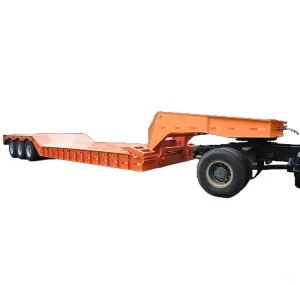
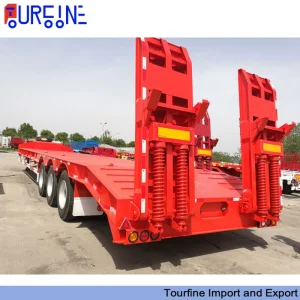
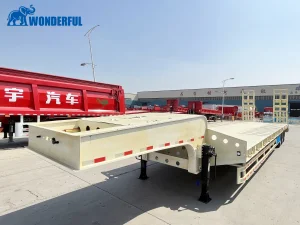
In the high-stakes world of heavy infrastructure and mining, the Front Loading Lowbed Trailer (commonly known as the Removable Gooseneck or RGN trailer) has become an indispensable asset. Unlike traditional rear-loading trailers that require steep ramps, front-loading technology allows the entire gooseneck to be detached, providing a ground-level ramp for the safest and most efficient loading of massive equipment like excavators, pavers, and industrial transformers.
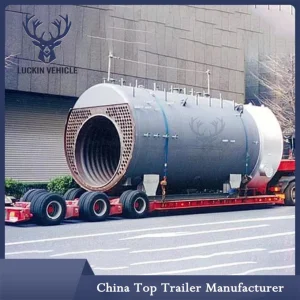
Currently, the global market is witnessing a seismic shift toward specialized heavy-haulage solutions. From the massive mining pits in Western Australia to the urban expansion projects in Dubai, the demand for trailers that can handle 60 to 1200 tons is skyrocketing. China has emerged as the global epicenter for this manufacturing, blending high-tensile steel engineering with competitive pricing models that traditional Western manufacturers struggle to match.
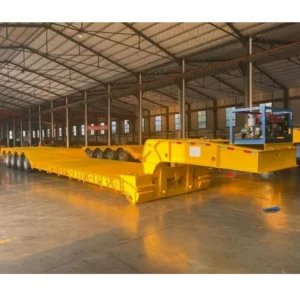
Modern RGN trailers now feature fully automated hydraulic systems that allow a single operator to detach the gooseneck in under 60 seconds, drastically reducing labor costs and safety risks.
The use of HG60 and T700 high-strength steel is the new standard. These materials provide a higher strength-to-weight ratio, allowing for increased payloads without exceeding road weight limits.
Integration of IoT sensors for real-time monitoring of axle load, tire pressure, and structural stress ensures the longevity of the trailer in harsh environments.
As we look toward 2025 and beyond, the "Front Loading" design is evolving into modular "Multi-Axle" systems. These systems allow companies to add or remove axle lines (Dolly) based on the specific weight of the cargo, offering unparalleled flexibility for logistics firms managing diverse fleets. China’s top manufacturers are at the forefront of this modular revolution, providing customized solutions that meet local road regulations in over 100 countries.
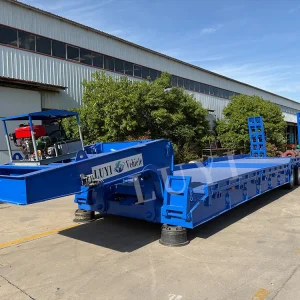
The procurement profile for front-loading lowbeds varies significantly by region. In North America and Europe, buyers prioritize compliance with DOT and EU bridge laws, focusing on telescopic extendable decks for long industrial components like wind turbine blades. In contrast, markets in Africa and Southeast Asia demand ruggedness above all else—trailers that can withstand unpaved roads and extreme humidity without structural failure.
Local application scenarios include:
Our factory stands as a titan in the Chinese manufacturing landscape, offering several distinct advantages that make us the preferred partner for global heavy-haulage companies:
We don't just build trailers; we engineer solutions. Our team of 50+ engineers works directly with clients to customize gooseneck heights, deck lengths, and axle configurations to suit specific regional road laws.
By leveraging China's massive steel supply chain and advanced robotic welding centers, we offer a 30-40% cost advantage over Western counterparts without compromising on safety or component quality.
We understand that downtime is the enemy of profit. Our "Global Service Initiative" ensures that critical hydraulic parts and structural components are available via regional hubs in Dubai, Johannesburg, and Mexico City.
The production process in our facility involves rigorous stress testing. Every front-loading lowbed undergoes a 150% load test and X-ray weld inspection before it leaves our bay. This commitment to quality is why our trailers are found in the world's most demanding environments, from the scorching heat of the Saharan mines to the freezing temperatures of Siberian oil fields.
Furthermore, our "Front Loading" design is optimized for shipping. By designing goosenecks that can be easily detached and stowed, we minimize the cubic meter volume for Ro-Ro or Flat Rack shipping, saving our customers thousands in ocean freight costs.
To understand why China's top manufacturers lead the market, one must look at the technical specifications. A premium Front Loading Lowbed is more than just steel and wheels; it is a symphony of hydraulic power and structural integrity. The Removable Gooseneck (RGN) is the heart of the trailer. Our designs utilize a "non-ground bearing" gooseneck, which means the hydraulic cylinders do not need to push against the ground to lift the trailer, making it ideal for soft or uneven terrain common in construction sites.
We utilize Q460C and HG60 high-yield steel. These steels are characterized by their excellent weldability and toughness at low temperatures. In the manufacturing process, we employ submerged arc welding for the main longitudinal beams, ensuring a deep penetration weld that can withstand the dynamic loads of moving heavy machinery over bumpy terrain. This prevents the common issue of "beam sagging" seen in lower-quality trailers.
Our hydraulic units are powered by either an independent diesel engine (Pony Motor) or a tractor PTO (Power Take-Off) system. We use world-class valves and seals from brands like Parker or Hawe, ensuring that the gooseneck operation is smooth and leak-free for years of service. The ability to adjust the deck height via the hydraulic gooseneck is a critical feature, allowing operators to clear obstacles like low bridges or railroad crossings by simply raising or lowering the trailer chassis on the fly.
While mechanical leaf spring suspension is standard for cost-effective models, our top-tier export units often feature Heavy Duty Air Suspension or Hydraulic Steering Axles. Hydraulic steering is particularly vital for trailers exceeding 20 meters in length, as it allows the rear axles to turn in synchronization with the truck, drastically reducing the turning radius and preventing tire scrub on tight corners.
Safety is non-negotiable. Every trailer we manufacture complies with international lighting and braking standards (ABS/EBS). We provide comprehensive load charts and stability calculations for every unit, ensuring that operators know exactly how to distribute the weight of their cargo for maximum safety. Our front-loading systems include secondary locking pins to ensure the gooseneck stays securely attached even in the event of a hydraulic pressure loss.