IDS Auto
IDS Auto
IDS Auto
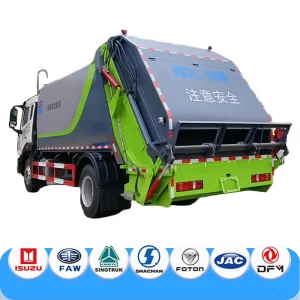
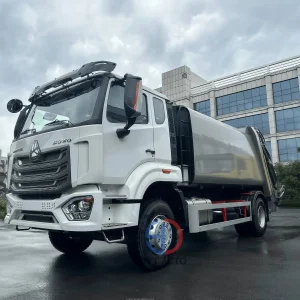
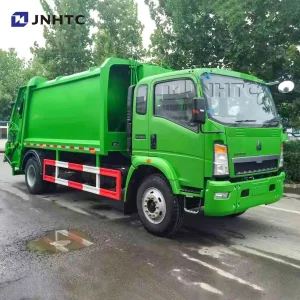
As urbanization accelerates globally, the demand for efficient waste management systems has never been more critical. Garbage compactor trucks are the backbone of urban sanitation, serving as the primary tool for collecting, transporting, and reducing the volume of municipal solid waste (MSW). In 2024, the global market for these specialized vehicles is witnessing a paradigm shift driven by environmental regulations, the rise of "Smart Cities," and the urgent need for cost-effective logistical solutions.
From the bustling streets of Southeast Asian metropolises to the expansive residential neighborhoods of North America and Europe, garbage compactor trucks must adapt to diverse operational environments. For international procurement managers, the challenge lies in sourcing vehicles that offer high compression ratios, long-term durability, and low maintenance costs. China has emerged as a global leader in this sector, not just through volume, but through significant leaps in hydraulic engineering and chassis reliability.
Over 55% of the world's population lives in cities, necessitating daily, high-volume waste removal.
Advanced compaction reduces the number of trips, lowering carbon emissions and fuel consumption.
Developing nations are investing billions in sanitation infrastructure, prioritizing compactor reliability.
The garbage compactor truck industry is no longer just about brute force; it is about intelligence. AI-integrated sensors are now being utilized to monitor the fullness of the hopper, optimize the compaction cycle, and even identify types of waste to prevent damage to the hydraulic systems. This technological leap reduces wear and tear, extending the lifespan of the vehicle significantly.
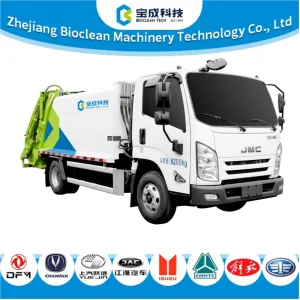
Furthermore, the transition to NEV (New Energy Vehicle) chassis is gaining momentum. Electric garbage compactor trucks are becoming the preferred choice for nighttime waste collection due to their near-silent operation, addressing noise pollution concerns in densely populated residential areas. As a leading China factory, we are at the forefront of this transition, offering both traditional diesel and cutting-edge electric solutions.
Global B2B buyers—ranging from municipal governments to private waste management firms—have highly specific requirements when it comes to garbage compactor trucks. The procurement process is often focused on the Total Cost of Ownership (TCO). This includes the initial purchase price, fuel efficiency, the availability of spare parts, and the ease of local maintenance.
In the African and Latin American markets, there is a strong preference for robust, mechanical-heavy designs that can withstand rough road conditions and varying fuel qualities. Conversely, Middle Eastern and Southeast Asian markets are increasingly looking for high-capacity 16cbm to 20cbm trucks equipped with advanced hydraulic systems and climate-controlled cabins for operators. China’s manufacturing ecosystem allows for this level of customization, providing "fit-for-purpose" vehicles that outperform standard models in local conditions.
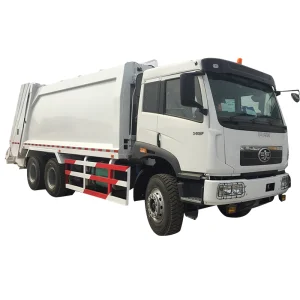
Localization is Key: Whether it's Left-Hand Drive (LHD) for the Americas or Right-Hand Drive (RHD) for markets like Thailand, Malaysia, or South Africa, our factory provides fully compliant configurations. We integrate renowned chassis brands like HOWO, SHACMAN, FAW, and FOTON to ensure that our global clients have access to reliable service networks in their home countries.
China’s dominance as the "World’s Factory" is particularly evident in the special-purpose vehicle industry. For garbage compactor trucks, the advantage is rooted in a massive, integrated supply chain. From high-tensile steel production to the precision manufacturing of hydraulic cylinders, every component is produced with economies of scale that Western manufacturers find difficult to match.
1. Advanced R&D and Customization: We don't just sell trucks; we provide engineering solutions. Our R&D teams can customize the compression mechanism—choosing between swing arm, rear-loading, or side-loading systems—based on the specific bin types used in your region (e.g., 240L, 660L, or 1100L DIN standard bins).
2. Rigorous Quality Control: Modern Chinese factories employ robotic welding and automated painting lines, ensuring structural integrity and corrosion resistance, which is vital for vehicles handling acidic and wet waste. Every truck undergoes rigorous hydraulic pressure testing and road trials before shipment.
3. Unbeatable Logistics and Support: Located near major ports like Shanghai and Qingdao, we offer streamlined global shipping. Furthermore, our "SKD/CKD" (Semi-Knocked Down) options allow for lower import duties in many countries, where local assembly can be performed with our technical guidance.
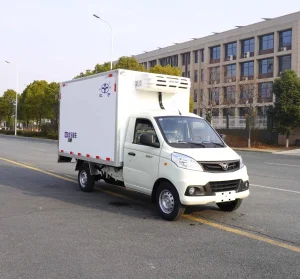
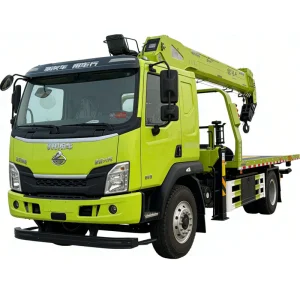
4. Multi-Sector Expertise: Beyond garbage compactors, our expertise extends to a full range of special vehicles, including refrigerated trucks, tow trucks, and fuel tankers, making us a one-stop shop for municipal and industrial fleet expansion.
Effective waste management is not a "one size fits all" operation. Our garbage compactor trucks are engineered for specific environmental and cultural contexts:
By understanding these nuances, we ensure that every truck delivered is an asset to the community it serves, maximizing uptime and ensuring that cities remain clean and healthy.