IDS Auto IDS Auto

2026 Top Trends in Lightweight Semi Trailer Manufacturing

Time:2026-09-19 Author:Charlotte
0%

The 2026 trailer market is entering a practical turning point. Fleets want lower tare weight, higher payload capacity, and longer service life. Yet lightweight design cannot sacrifice frame strength, braking performance, or cargo protection.

This is where Trends in lightweight semi trailer manufacturing technology becomes commercially important. ACT Research’s North American Commercial Vehicle Outlook identifies persistent pressure on freight efficiency, replacement demand, and operating costs. NACFE’s work on freight efficiency also emphasizes weight reduction, aerodynamic design, and improved component integration. These reports suggest a clear direction, but they do not promise a simple solution.

As Brent Yeagy, President and CEO of Wabash, has stated, “The trailer is the most underappreciated asset in the supply chain.” His observation remains relevant in 2026. Aluminum side panels, high-strength steel, composite floors, optimized axles, and digital production tools are changing trailer manufacturing. A few kilograms saved at each assembly station can become meaningful payload across thousands of annual trips.

But lighter is not always better.

Manufacturers still face fatigue, corrosion, repairability, and recycling challenges. A composite panel may reduce weight, yet complicate field repairs. A thinner structural member may improve payload, yet reduce tolerance for poor loading practices. This article examines the leading technologies, material choices, production methods, and unresolved trade-offs shaping lightweight semi-trailer manufacturing. It also considers where current industry assumptions may be incomplete. Reliable progress will require measured testing, lifecycle data, and feedback from drivers, technicians, and fleet managers.

2026 Top Trends in Lightweight Semi Trailer Manufacturing

Lightweight Semi Trailers: Definition, Structure, and Manufacturing Goals

2026 Top Trends in Lightweight Semi Trailer Manufacturing

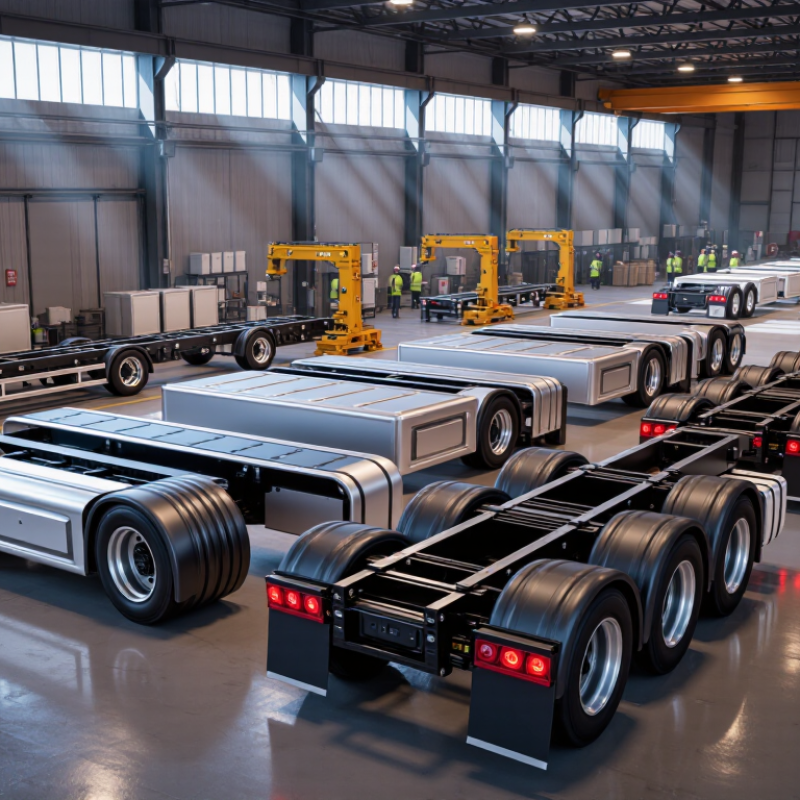
A lightweight semi trailer carries freight with less empty mass than a conventional trailer. Its structure usually combines high-strength steel, aluminum components, optimized flooring, axles, suspension, and aerodynamic panels. Engineers remove material carefully, not randomly. Weight matters.

The manufacturing goal is broader than reducing tare weight. It includes higher payload capacity, lower fuel consumption, corrosion resistance, serviceability, and stable performance under repeated loading. The European Commission reports that heavy-duty vehicles create about 25% of road transport carbon dioxide emissions in Europe. This places trailer efficiency under increasing scrutiny.

The U.S. Environmental Protection Agency’s SmartWay technical resources indicate that aerodynamic improvements can reduce fuel use by approximately 5% to 15%, depending on vehicle configuration and operating conditions. Lightweight design can support these gains, but results vary. The lightest trailer is not always the best trailer. That assumption needs testing.

Key Materials and Design Innovations Shaping Lightweight Semi Trailers

Lightweight semi trailer manufacturing is shifting from simple material substitution to engineered mass reduction. High-strength steel now supports thinner chassis rails and cross-members while preserving stiffness around kingpins and axle mounts. The World Steel Association’s 2024 sustainability data indicates that modern advanced steels can deliver higher strength with substantially reduced material volume. Aluminum remains valuable for sidewalls, floors, and roof structures. The International Aluminium Institute reports that recycled aluminum uses about 5% of the energy required for primary production.

Design software is becoming equally important. Finite-element analysis can identify stress peaks before a prototype reaches the road. Aerodynamic underbody panels, tapered rear sections, and smoother side surfaces also reduce drag. The European Commission’s 2024 heavy-duty vehicle standards continue pushing manufacturers toward lower fuel consumption and emissions, making every kilogram and air gap more significant. Small details matter.

Yet lightweighting is not automatically better. Thin panels may dent more easily, and composite repairs can require specialized training. A 2024 freight-efficiency review from the North American Council for Freight Efficiency notes that operational gains depend heavily on payload, route profile, and maintenance quality. That warning deserves attention. A trailer saving 300 kilograms can lose its advantage if repairs increase downtime or recycling becomes difficult. Practical testing, repair records, and full life-cycle calculations should guide the final design.

Smart Manufacturing and Automation Trends in Trailer Production

Smart manufacturing is reshaping lightweight semi trailer production in 2026. Digital work instructions can guide operators through frame assembly, welding, and torque checks. Sensors record temperature, pressure, and tool performance in real time. This creates a clearer production history for every trailer.

Deloitte’s 2023 Global Smart Manufacturing Survey found that 86% of manufacturers expect smart manufacturing to become a major competitiveness driver within five years. That pressure is reaching trailer factories. Automated welding cells can improve repeatability, especially around aluminum joints and high-strength steel components. The International Federation of Robotics reported 541,302 industrial robots were installed worldwide in 2023. Automation is expanding, but it is not a complete answer.

A machine can repeat an error perfectly.

Machine vision can inspect weld placement, fastener presence, and surface defects before final assembly. Digital twins can test weight distribution and production changes before physical trials. Connected maintenance systems may also reduce unexpected equipment stoppages. However, data quality remains a weak point. Incorrect sensor readings can produce confident but misleading decisions. Skilled technicians still need to verify unusual results, adjust fixtures, and understand material behavior. Deloitte’s research also highlights workforce capability as a central smart manufacturing challenge. The practical trend is not removing people. It is combining experienced judgment with faster, traceable automation.

2026 Top Trends in Lightweight Semi Trailer Manufacturing - Smart Manufacturing and Automation Trends in Trailer Production

Data overview of material efficiency, connected production, robotics, quality control, and energy management

Trend Area Production Application Relevant Data Dimension 2026 Planning Benchmark Expected Manufacturing Benefit Implementation Priority
High-strength lightweight steel Frame rails, cross-members, suspension supports, and load-bearing brackets Material strength, structural mass, fatigue resistance, and weldability Use material grades and section designs that deliver equivalent strength with a planned structural mass reduction of approximately 5–15%, subject to engineering validation Lower tare weight, improved payload capacity, and reduced material consumption High
Aluminum and hybrid structures Side panels, floors, roof assemblies, doors, and selected subframes Material density, corrosion resistance, joining compatibility, and lifecycle cost Aluminum density is approximately 2.70 g/cm³ compared with approximately 7.85 g/cm³ for carbon steel; final weight savings depend on design and thickness Weight reduction and improved corrosion performance in exposed assemblies High
Digital twin and 3D process simulation Product design, weld sequence planning, line balancing, and virtual commissioning Engineering-change frequency, simulation coverage, cycle time, and first-pass yield Validate major tooling, ergonomic, and assembly changes virtually before physical implementation; track simulated versus actual cycle time Fewer physical prototypes, earlier error detection, and faster product launches High
Robotic welding and collaborative automation Long welds, repetitive subassembly, material handling, and fastening operations Arc-on time, weld repeatability, manual handling time, and equipment utilization Prioritize repetitive, high-volume operations; monitor utilization, downtime, rework rate, and operator ergonomic exposure rather than automation count alone More consistent weld quality, improved workplace safety, and higher production stability High
Machine vision and automated inspection Weld inspection, hole-position verification, surface inspection, and component presence checks Defect detection rate, false rejects, inspection coverage, and traceability completeness Inspect critical characteristics at the point of production and retain image or measurement records linked to the unit serial number Earlier defect containment, lower rework risk, and stronger audit evidence High
IoT-enabled production monitoring Welding cells, presses, cranes, torque tools, paint systems, and assembly stations Overall equipment effectiveness, downtime minutes, cycle-time variation, and energy per unit Capture machine status, cycle counts, alarms, and energy data automatically for bottleneck and preventive-maintenance analysis Reduced unplanned downtime and improved capacity planning based on actual shop-floor data High
AI-assisted predictive maintenance Welding power sources, robotic joints, conveyors, hydraulic equipment, and paint-line machinery Vibration, temperature, current draw, alarm history, and mean time between failures Start with rule-based alerts and historical failure data before deploying machine-learning models for anomaly detection Maintenance scheduled around equipment condition and fewer unexpected production interruptions Medium-High
Automated material handling Sheet-metal transfer, kitting, finished-unit movement, and warehouse replenishment Travel distance, handling time, inventory accuracy, and manual lifting exposure Use automated guided vehicles or autonomous mobile robots where routes are stable and material flows are repetitive Lower internal transport time, fewer handling errors, and reduced ergonomic risk Medium-High
Additive manufacturing for tooling Jigs, fixtures, ergonomic aids, inspection gauges, and replacement tooling components Tool lead time, fixture mass, customization frequency, and replacement cost Apply additive production mainly to low-volume, complex, lightweight, or frequently modified tooling Shorter tooling development cycles and easier production-line customization Medium
Energy-efficient fabrication Welding, cutting, compressed air, painting, curing, heating, and facility utilities kWh per trailer, compressed-air leakage, peak demand, and process yield Establish a measured energy baseline by process and report energy intensity per completed unit Lower operating cost, improved emissions reporting, and better control of energy-intensive processes High
Digital quality traceability Serial-number tracking, weld parameters, torque records, material certificates, and final inspection Record completeness, defect genealogy, corrective-action time, and document retrieval time Link critical process records to each trailer or major assembly throughout the manufacturing route Faster root-cause analysis, stronger compliance documentation, and improved recall control High
Circular material management Steel and aluminum scrap segregation, component replacement, refurbishment, and end-of-life planning Scrap rate, recycled-content share, recovery rate, and material yield Track ferrous and non-ferrous scrap separately and include material yield in design and purchasing decisions Lower waste, improved material recovery, and more transparent lifecycle reporting Medium-High
Cybersecurity for connected factories Industrial networks, programmable controllers, cloud dashboards, remote service, and production databases Asset inventory, patch status, access control, backup recovery time, and security incidents Maintain segmented networks, role-based access, offline backups, and documented incident-response procedures Improved production continuity and reduced exposure of operational technology systems High

Data notes

Planning benchmarks are engineering-oriented reference ranges or recommended measurement practices, not company-specific performance claims or audited market averages.

Material density references: aluminum approximately 2.70 g/cm³; carbon steel approximately 7.85 g/cm³; carbon-fiber composite density commonly approximately 1.50–1.60 g/cm³, depending on formulation and fiber volume.

Recommended measurement framework: ISO 22400 for manufacturing performance indicators, ISO 50001 principles for energy management, ISO 9001 principles for quality management, and ISO/IEC 62443 principles for industrial automation and control-system cybersecurity.

Sustainability, Electrification, and Circular Production Practices

2026 Top Trends in Lightweight Semi Trailer Manufacturing

Sustainability, Electrification, and Circular Production Practices

Lightweight semi trailer manufacturing is shifting from simple weight reduction toward measurable resource efficiency. High-strength steel and recycled aluminum can lower material use while preserving structural performance. Engineers now inspect joints, floors, and suspension mounts under repeated load cycles. Small savings matter. A lighter trailer can carry more cargo without increasing road energy demand, but durability must remain non-negotiable.

Electrification is entering trailer systems through electric refrigeration units, smart axles, and battery-supported auxiliary equipment. These systems can reduce idling and local emissions during loading or overnight parking. However, battery weight, charging access, and cold-weather performance still create practical limits. Real workshop testing often reveals problems that computer models miss. A promising prototype may need stronger connectors, simpler controls, or easier field repair.

Circular production is becoming more specific. Manufacturers are designing panels, flooring, and lighting assemblies for removal instead of permanent bonding. Clearly labeled materials can improve sorting during refurbishment. Factory scrap can return to controlled production streams, while damaged components may be remanufactured after inspection. The process is not perfect. Mixed materials remain difficult to separate, and recycling claims require traceable records. Reliable progress depends on verified data, technician feedback, and honest lifecycle accounting rather than attractive percentages alone.

Market Drivers, Safety Standards, and Future Industry Developments

Lightweight semi trailer manufacturing is being shaped by fuel costs, payload demand, and stricter fleet efficiency targets. Operators want trailers that carry more cargo without increasing axle loads. Aluminum sections, high-strength steel, and optimized crossmembers are reducing unnecessary mass. However, lightweight is not automatically better. A thinner wall can increase repair sensitivity after impact.

Safety standards remain central to this development. Manufacturers must verify braking performance, suspension strength, lighting, load distribution, and rear underride protection under applicable regional requirements. In practice, experienced engineers combine computer simulations with physical fatigue testing. They also inspect weld zones, kingpin areas, and floor joints because small weaknesses often appear after repeated loading. Requirements differ by market, so compliance should be confirmed through qualified testing and documented inspections.

Tips: Compare tare weight with rated payload, not weight alone. Ask for fatigue-test evidence and material traceability. Check whether service teams can repair the structure locally. Future trailers may use connected sensors, predictive maintenance, recyclable materials, and digital design models. These tools can reveal uneven tire loading or frame stress before a failure occurs. Yet connectivity brings data-management concerns, and some fleets may not have trained technicians. That gap deserves more attention.

2026 Top Trends in Lightweight Semi-Trailer Manufacturing

Market drivers, safety standards, and regulatory reference limits shaping lightweight semi-trailer design.

Lightweighting is increasingly driven by payload efficiency, fuel and energy savings, corrosion resistance, and future zero-emission powertrains. The reference values shown are established regulatory limits: the European Union permits a 40-tonne maximum laden mass for standard articulated vehicles, while the United States applies an 80,000-pound federal gross vehicle weight limit. Dimensional and axle-load requirements vary by jurisdiction and vehicle configuration.

References: EU Directive 96/53/EC; U.S. Federal Bridge Formula and 23 CFR Part 658; FMVSS 223 and FMVSS 224 rear impact guard requirements.

FAQS

What is a lightweight semi trailer?

It carries freight with less empty weight than a conventional trailer. Its design may combine high-strength steel, aluminum, optimized flooring, axles, suspension, and aerodynamic panels. Weight matters.

Why do manufacturers reduce trailer weight?

Lower tare weight can increase payload capacity and reduce fuel consumption. It may also improve efficiency during repeated trips. However, the lightest trailer is not always the best choice.

Which materials are commonly used?

High-strength steel supports thinner chassis rails and cross-members. Aluminum often appears in sidewalls, floors, and roof structures. Composite materials may reduce weight, but repairs can require special skills.

How does aerodynamic design improve performance?

Underbody panels, tapered rear sections, and smoother side surfaces can reduce air resistance. Fuel savings depend on speed, payload, route, and vehicle configuration. Results vary.

What testing should a lightweight trailer receive?

Engineers should use finite-element analysis around kingpins, axle mounts, cross-members, and doors. Physical fatigue testing remains important. Road trials reveal problems that computer models may miss.

Can a lightweight trailer carry more cargo safely?

It can, if the rated payload and axle limits support that use. Load distribution still matters. A thinner wall may suffer greater damage after impact.

What maintenance concerns should buyers consider?

Inspect weld zones, floor joints, suspension mounts, and kingpin areas regularly. Ask whether local technicians can repair the structure. A 300-kilogram saving means little if downtime increases.

What future features may appear in these trailers?

Connected sensors may monitor tire loading, frame stress, and maintenance needs. Recyclable materials and digital design models may also expand. Data systems still need trained technicians.

How should buyers compare lightweight trailer designs?

Compare tare weight, rated payload, fatigue evidence, repair time, and lifecycle cost. Check material traceability and regional safety documentation. Weight alone is an incomplete measure.

Conclusion

Lightweight semi trailers are designed to reduce tare weight while maintaining structural strength, cargo capacity, stability, and long-term reliability. Their development focuses on optimized frame geometry, high-strength steel, aluminum alloys, composite panels, and improved suspension systems. The latest Trends in lightweight semi trailer manufacturing technology also include computer-aided design, digital simulation, automated welding, robotic assembly, and real-time quality monitoring. These methods help manufacturers improve accuracy, shorten production cycles, and reduce material waste.

Sustainability is becoming equally important through recyclable materials, energy-efficient factories, remanufactured components, and designs that support lower fuel or energy consumption during transportation. Electrification is encouraging new trailer concepts, including lightweight electrical systems, regenerative technologies, and improved compatibility with low-emission vehicles. At the same time, stricter safety standards and evolving logistics requirements are driving advances in braking, lighting, load distribution, and collision prevention. Future development will likely combine intelligent manufacturing, modular construction, safer operation, circular production, and data-based maintenance to create more efficient and environmentally responsible semi trailers.

Charlotte

Charlotte

Charlotte is a seasoned marketing professional with a deep understanding of the company's portfolio and a passion for elevating its presence in the market. With a keen eye for detail and a commitment to excellence, she ensures that our professional blog is regularly updated with insightful articles......