IDS Auto
A small gap can matter. At highway speed, air presses against a trailer’s flat front, curls around its sides, and leaves a turbulent wake behind it. The tractor works harder to overcome that resistance. For fleets covering long routes, even modest drag reductions may help lower fuel use, though results vary with speed, trailer type, weather, loading, and driving conditions.
Semi trailer aerodynamic design benefits for fuel savings come from managing airflow rather than adding equipment at random. Side skirts can guide air beneath the trailer. A rear boat-tail can reduce turbulence at the back. Tractor-trailer gap treatments, roof fairings, and wheel covers address other sources of drag. Each feature has trade-offs: added weight, purchase cost, maintenance, and possible damage on rough routes. Details matter.
Mike Roeth, executive director of the North American Council for Freight Efficiency, has emphasized the value of testing fuel-saving technologies in real-world fleet operations. His practical message can be put this way: measure performance on the road, not only in a wind tunnel. That distinction is important. A promising device may perform differently across routes and seasons.
This guide examines seven aerodynamic features and the conditions where each may be useful. It is not a promise of fixed savings. Compare baseline fuel data, installation costs, and maintenance records before making a fleet-wide decision. And stay skeptical. A clean-looking trailer does not automatically mean a more efficient one.
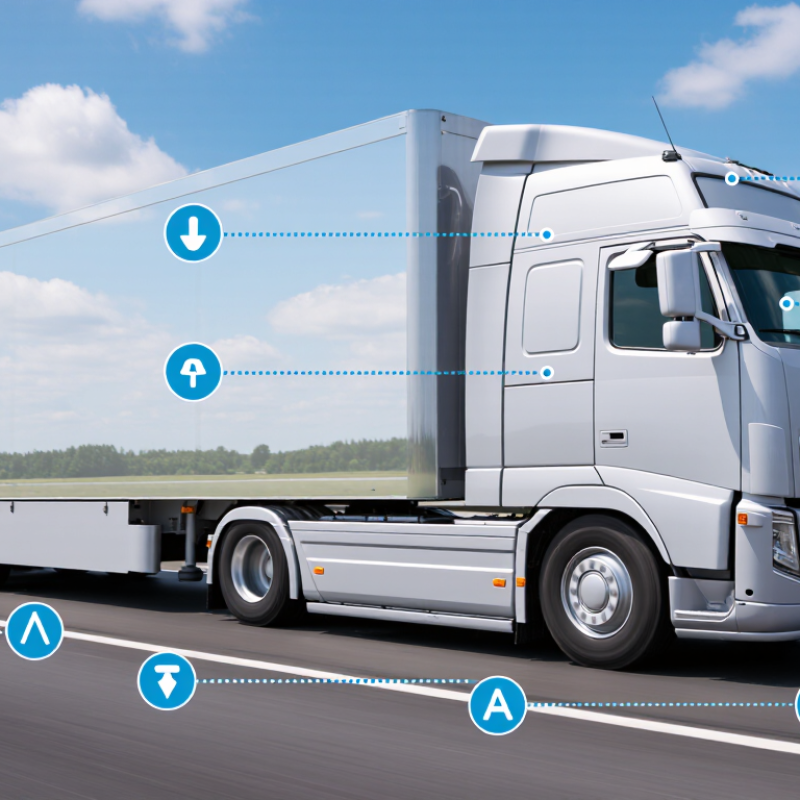
What Semi-Trailer Aerodynamics Means for Fuel Efficiency
A semi-trailer moving at highway speed pushes air aside and leaves turbulent air behind it. The tractor and trailer together must overcome this drag, which can increase fuel use. Aerodynamics is about managing airflow around the vehicle, not making it look sleek. Small changes can matter over thousands of miles.
A trailer’s front gap can trap air and create resistance. Side skirts help guide airflow beneath the trailer, where exposed wheels and crossmembers disturb it. Rear devices can reduce the low-pressure wake behind the doors. In practical terms, smoother airflow means the engine may need less energy to maintain speed. The effect varies with speed, trailer design, road conditions, and load. There is no single guaranteed savings figure.
Details matter. A loose panel can flap in crosswinds, while damaged skirts may add maintenance without delivering their intended benefit. Drivers and fleet teams can inspect fittings, check for cracks, and compare fuel records across similar routes. Keep conditions as consistent as possible. That is harder than it sounds. Traffic, weather, tire pressure, and driving habits all affect the numbers, so one unusually good week proves little. Aerodynamic equipment can help, but it works best as part of careful vehicle upkeep and realistic measurement.
A trailer’s shape affects how air moves around it. A square rear can leave a wide, turbulent wake, while a smoother roofline and tapered rear edges may help air separate more gradually. The benefit depends on speed, wind, load, and the tractor-trailer combination. Small gains are not guaranteed on every route.
The front end matters, too. A gap between the cab and trailer can trap fast-moving air and create drag. A properly fitted gap fairing can guide airflow across that space, while rounded or sloped trailer corners help reduce abrupt pressure changes. Details matter. Even a modest step, damaged panel, or poorly aligned fairing can disturb the flow.
In practical use, aerodynamic features should match the work. A trailer that spends most of its time at highway speed may benefit more than one used mainly in stop-and-go traffic. Check fit and condition during routine inspections; loose panels can shift and lose their intended effect. Wind-tunnel and road-test results offer useful evidence, but real fuel savings vary with driving habits and operating conditions. I would avoid promising a fixed percentage without measured fleet data. Airflow is messy. And sometimes the neatest design on paper is not the easiest one to maintain.
Side skirts and underbody panels can reduce the turbulent air that forms beneath a semi trailer. Skirts bridge the open space between the tractor and trailer wheels, helping air move along the sides instead of swirling around exposed components. A well-fitted skirt usually sits close to the ground without scraping over ordinary road surfaces. Too much clearance can weaken its effect; too little may invite damage on uneven driveways.
Underbody panels cover selected gaps around crossmembers, landing gear, and other exposed structures. Smooth transitions matter more than simply adding material. Loose edges, open joints, or panels that trap dirt can create new turbulence and maintenance problems. Fleet operators should check fasteners, ground clearance, and panel wear during routine inspections. Results vary with speed, trailer configuration, load, and weather, so fuel savings should be measured across comparable routes rather than assumed. Even a neat installation can disappoint.
Tips: Look for durable, lightweight panels with secure mounting points. Check skirts after tight turns and inspect panels for cracks or missing hardware. Record fuel use before and after installation on similar routes. Small differences in wind or traffic can distort a short test, so longer tracking is more useful.
7 Best Semi Trailer Aerodynamic Features for Fuel Savings
At highway speed, air separates from a trailer’s blunt rear and forms a low-pressure wake. This turbulent pocket pulls against the vehicle, adding aerodynamic drag. Rear devices, such as boat tails or rear fairings, guide airflow inward more gradually. Less abrupt separation can mean less drag and lower fuel use, though results vary with speed, trailer shape, wind, and vehicle setup.
A boat tail uses angled panels around the rear doors to narrow the wake. On a windy test day, its panels may flex or collect road grime, so inspect hinges, fasteners, and clearance during routine checks. A small gap or damaged panel can undermine performance. The improvement is not magic; route, load, and driving habits still matter. Operators should compare fuel records across similar routes and conditions rather than trust a single trip.
Tips: Keep rear panels clean and secure, and check that doors open freely. Record fuel use before and after installation under comparable conditions. Look for repeatable changes, not perfect results. Even careful testing has noise. That is worth admitting.
| Aerodynamic Feature | Where It Is Installed | How It Reduces Drag | Indicative Fuel-Saving Potential | Practical Considerations |
|---|---|---|---|---|
| Rear boat-tail panels | At the rear edges of the trailer | Gradually narrows the airflow leaving the trailer, helping reduce the low-pressure wake and turbulent air behind it. | About 4–7% in suitable highway operation | Performance depends on panel design, vehicle speed, wind, and operating conditions. Check rear-door access and site-clearance requirements. |
| Trailer side skirts | Along the lower sides of the trailer | Reduces airflow beneath the trailer and limits turbulence around exposed trailer components. | About 4–7% in suitable highway operation | Ground clearance, road conditions, maintenance access, and durability should be considered. |
| Tractor–trailer gap fairing | Between the tractor cab and the front of the trailer | Helps guide air across the gap, reducing the turbulent flow and pressure drag that can form between the two vehicles. | About 1–3%, depending on the combination | Results vary with tractor-to-trailer gap, cab shape, and trailer height. |
| Trailer-front corner and nose fairings | At the front face and corners of the trailer | Smooths airflow around the trailer’s leading edges, where separated flow can contribute to pressure drag. | About 1–3%, depending on the design | Benefits depend on how well the fairing matches the tractor and trailer geometry. |
| Aerodynamic underbody panels | Along exposed areas underneath the trailer | Creates a smoother path for airflow under the trailer and helps reduce turbulence around chassis components. | About 1–3% in suitable configurations | Panels need adequate clearance and must allow for inspections, repairs, and cooling airflow where required. |
| Aerodynamic wheel covers | Over or around trailer wheels | Reduces airflow disturbance around rotating wheels and exposed wheel components. | Generally modest; often around 1% or less on its own | Ease of wheel inspection, brake access, and compatibility with the wheel setup are important. |
| Aerodynamic mudflaps | Behind trailer wheels | Designed to reduce air resistance around the wheel area while still managing spray from the tires. | Generally modest; often around 1% or less on its own | Must meet applicable spray-control requirements and withstand road debris and weather. |
Note: Savings are indicative estimates for highway-oriented use, not guaranteed results. Actual fuel consumption depends on speed, route, wind, vehicle configuration, load, tires, and driving conditions. Individual feature estimates should not be added together because their effects overlap.
Choosing aerodynamic features starts with the trailer’s usual routes, speeds, and cargo. Side skirts can reduce airflow beneath the trailer, while a rear tail device helps manage turbulence behind it. Roof fairings matter more when tractor and trailer heights do not align. Match the feature to the actual vehicle combination. A fairing that looks right in a yard may leave a gap on the highway.
Check fit, durability, and access before installation. Measure ground clearance with the trailer loaded, and consider steep driveways, loading docks, and rough roads. Lightweight panels can save fuel, but loose fasteners or damaged edges may create noise and drag. Small details count. Keep hinges, latches, lights, and tires easy to inspect.
Maintenance should be part of routine walkarounds. Look for cracked panels, missing bolts, bent brackets, and debris caught under skirts. Clean surfaces when needed, since packed mud can add weight and hide damage. Track fuel use over comparable routes and loads, rather than trusting one unusually good week. Results vary with wind, traffic, speed, and driving habits. I would not expect every feature to pay off equally; sometimes a simple repair matters more than adding another device. Recheck performance after changes, and revise the setup when operating conditions shift.
Estimated fuel-use reduction by feature. Results vary with speed, trailer configuration, weather, and operating conditions.
How to choose and maintain: Treat these figures as approximate ranges, not guaranteed savings. Prioritize features suited to your routes and trailers, then inspect them regularly for damage, loose fasteners, and proper alignment. Measure fuel use under comparable operating conditions to assess real-world results.
It means managing airflow around the tractor and trailer to reduce drag. At highway speed, smoother airflow may help the engine use less energy.
Air can collect in the space between the tractor and trailer. This may create resistance as the vehicle moves forward.
They guide airflow beneath the trailer, where exposed wheels and crossmembers can disrupt it. Damaged skirts may lose their intended benefit.
Rear fairings or boat tails guide air inward more gradually. This can narrow the turbulent wake behind the doors and reduce drag.
No. Results depend on speed, trailer design, wind, road conditions, load, and vehicle setup. One good trip proves little.
Check panels, hinges, fasteners, and door clearance. Look for cracks, loose parts, grime, or panels that flex in crosswinds.
Compare fuel records across similar routes and conditions. Keep notes on weather, traffic, tire pressure, load, and driving habits.
Many factors change at once. Even careful testing has noise, so repeated results matter more than one unusually good week.
Semi trailer aerodynamic design benefits for fuel savings begin with managing how air moves around the trailer. A smoothly shaped body and carefully designed front end can reduce the amount of air resistance a truck must overcome. Side skirts and underbody panels help limit turbulent airflow beneath the trailer, while well-chosen rear devices can reduce the wake of swirling air behind it. Together, these features may help lower fuel use, especially when a vehicle travels steadily at highway speeds.
Choosing effective aerodynamic features involves considering trailer type, typical routes, operating conditions, and the balance between potential fuel savings and practical costs. Regular inspections are also important: secure fittings, clean surfaces, and prompt repairs help components continue to work as intended. By selecting suitable features and maintaining them over time, operators can make informed improvements to airflow and support more fuel-efficient trailer operation.
