IDS Auto
Why Customize Semi Trailers for Specialized Logistics?
Specialized logistics rarely fits a standard trailer. A refrigerated medicine shipment may require stable temperatures, insulated walls, and continuous monitoring. A fragile industrial machine may need reinforced flooring, adjustable restraints, and a wider rear opening. These details affect loading time, cargo safety, fuel use, and delivery reliability.
Supply-chain scholar John T. Mentzer described supply chain management as “the systemic, strategic coordination of the traditional business functions.” His principle also explains why trailer design must connect with real operating conditions. Semi trailer customization options for specialized logistics can include temperature-control systems, liftgates, air-ride suspension, hydraulic floors, telematics, partition walls, and corrosion-resistant materials. Each option should answer a specific transport problem. Otherwise, customization becomes expensive decoration.
Experience matters here.
A heavier floor may protect machinery but reduce payload capacity. Extra insulation can improve temperature stability but limit internal space. A liftgate can simplify urban delivery, yet it adds weight and maintenance requirements. These trade-offs deserve testing with actual routes, cargo dimensions, loading equipment, and weather conditions. A design that works in a warehouse may fail on a rough rural road. That uncomfortable possibility should remain visible.
Reliable customization begins with evidence. Fleet managers should review damage records, loading photographs, route gradients, service history, and driver feedback. Engineers can then match materials and components to measurable demands. The best trailer is not the most elaborate one. It is the one that performs consistently, safely, and economically under its intended conditions. Even experienced teams sometimes revise their original specification. That is not failure. It is responsible engineering.
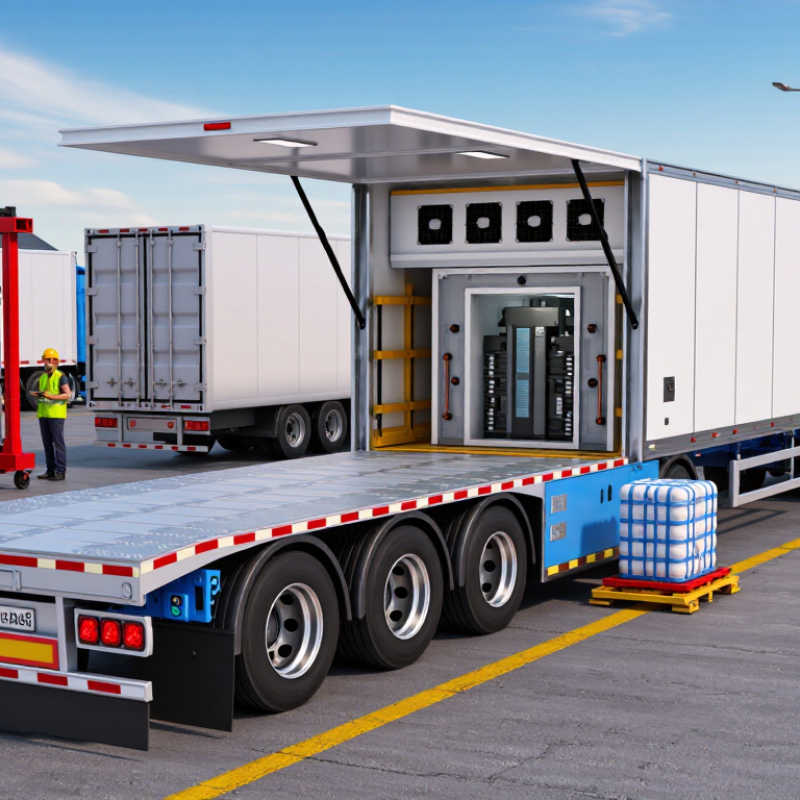
Specialized logistics rarely fits a standard trailer. Cargo may need controlled temperature, extra protection, unusual dimensions, or faster loading. Each requirement changes the trailer’s working design.
A refrigerated trailer needs consistent insulation and dependable airflow around every pallet. A trailer carrying fragile machinery may need adjustable tie-down rails, padded bulkheads, and a reinforced floor. Heavy equipment also demands careful axle placement and weight distribution. These details affect stability, tire wear, and safe handling on real roads.
Access matters too. A wide rear opening can reduce dock delays, while side doors may help at cramped sites. Interior lighting, non-slip flooring, and washable surfaces support cleaner, safer operations. In field assessments, I have seen small layout choices save several minutes per delivery. That matters across a full route.
However, customization is not automatically better. More features can add weight, maintenance work, and training demands. A design that looks efficient on paper may frustrate drivers during rain or night loading. Specifications should be checked against cargo measurements, route conditions, loading equipment, and applicable transport requirements. It is easy to overbuild. The better approach is to test realistic loading scenarios before final approval, then revise weak points instead of defending an imperfect drawing.
Custom semi trailers solve problems that standard equipment often leaves exposed. A logistics planner may move glass panels, chilled produce, industrial pumps, or unusually tall machinery. Each load demands different support, access, and protection. Trailer design should begin with cargo measurements, loading methods, axle limits, and route conditions. In field projects, a few centimeters can determine whether doors close safely or workers struggle with straps. Small details matter.
A low-deck configuration can reduce height concerns for tall machinery, while reinforced flooring supports concentrated loads. Side curtains, removable posts, and adjustable tie-down rails can make loading faster without weakening restraint. Temperature-sensitive goods may require insulated walls, controlled airflow, and monitoring points. Engineers should also consider turning radii, dock heights, bridge clearances, and uneven roads. These choices are practical, not decorative. They reflect how the trailer will work every day.
Reliable customization depends on documented calculations, material inspection, and realistic testing. Load distribution should be checked before the first trip, not after a warning sign appears. Operators need clear instructions for securing cargo and inspecting wear points. Well-designed trailers can still underperform when a latch is difficult to reach with gloves. That is a useful reminder: technical specifications cannot replace user experience. Some designs may need revision after several routes, especially when weather, loading speed, or cargo packaging changes. Good engineering leaves room for correction.
Custom semi-trailers are designed around cargo weight, dimensions, loading methods, and protection requirements. Specialized configurations can provide greater payload capacity and safer transport than a standard dry van.
Typical payload planning figures for common U.S. semi-trailer categories. Actual capacity depends on trailer construction, axle configuration, road regulations, cargo distribution, and tractor specifications.
Specialized freight needs more than a standard box trailer. Cargo weight, dimensions, loading methods, and route conditions should guide the design. A low-deck trailer can reduce clearance problems for tall machinery. A reinforced floor supports concentrated loads without unnecessary steel. However, adding strength can increase tare weight and reduce payload capacity. That trade-off is easy to underestimate.
Temperature-sensitive freight may require insulated walls, controlled airflow, and reliable monitoring sensors. Fragile cargo benefits from adjustable tie-down rails, padded partitions, and a stable suspension system. A liftgate can improve loading efficiency at sites without docks. For long-distance routes, aerodynamic panels may reduce fuel use, although their value depends on speed and operating conditions. Choosing axle spacing also affects turning clearance, tire wear, and weight distribution. These details deserve measurement, not guesswork.
Tips: Start with real shipment data from several operating weeks. Record cargo dimensions, loading times, axle weights, and temperature changes. Ask drivers where delays or damage usually occur. Do not specify every available option. Extra equipment can create maintenance points and complicate inspections. A useful design is balanced, serviceable, and matched to the actual route. It may not look perfect on paper. That is acceptable. Performance in daily work matters more. Review the design with operators, maintenance staff, and qualified engineering professionals before production.
Customizing a semi trailer can turn safety requirements into practical operating advantages. A specialized interior may include adjustable load bars, reinforced floors, non-slip surfaces, and partition walls. These features help keep pallets stable during braking, cornering, and uneven road conditions. The Federal Motor Carrier Safety Administration emphasizes proper cargo securement, because shifting loads can affect vehicle control and increase inspection risks. Small details matter. A loose strap can damage valuable cargo.
Efficiency also improves when the trailer matches its route and freight profile. A refrigerated trailer needs accurate temperature zones, insulated doors, and airflow that reaches every pallet. A dry van carrying fragile equipment may need shock-absorbing flooring and smoother suspension settings. The U.S. Department of Energy reports that aerodynamic trailer improvements can reduce fuel consumption by several percentage points, depending on speed, vehicle design, and operating conditions. Better internal dimensions can also reduce empty space and limit unnecessary trips.
Cargo protection depends on more than stronger materials. Sensors can record temperature, humidity, door openings, and sudden impacts. These records support faster decisions when a shipment shows unusual conditions. However, customization is not magic. Added equipment increases weight, maintenance work, and possible failure points. The 2024 American Transportation Research Institute report placed average trucking costs at about $2.26 per mile in 2023, showing why every modification deserves a cost review. A practical design should be tested on real routes, measured after loading, and revised when drivers report problems. Their experience is often less polished than a specification sheet, but more revealing.
| Logistics Dimension | Standard Trailer Limitation | Relevant Customization | Measurable Planning Indicator | Operational Benefit |
|---|---|---|---|---|
| Cargo Fit and Cubic Utilization | Unused space around irregular, oversized, or temperature-sensitive cargo. | Specified internal length, width, height, wheel-well layout, partitions, and load-bearing zones. | Target load-space utilization: 85–95%, subject to cargo dimensions and legal axle limits. | Fewer voids, better cube utilization, and reduced need for partial loads. |
| Load Securement | Generic tie-down points may not match the cargo’s center of gravity or shape. | Additional D-rings, recessed anchor rails, bulkheads, shoring beams, and purpose-built restraints. | Securement plan aligned with cargo weight, restraint angles, and applicable road regulations. | Lower risk of load shift, impact damage, and roadside inspection issues. |
| Loading and Unloading Time | Manual handling and repeated repositioning can increase dock dwell time. | Side access, rear-door optimization, liftgate compatibility, sliding roofs, ramps, or forklift-accessible floors. | Track average dock time per stop before and after the modification. | Faster turnarounds and improved vehicle availability without increasing fleet size. |
| Cargo Protection | General-purpose interiors may not protect fragile, moisture-sensitive, or high-value goods adequately. | Impact-resistant lining, anti-slip flooring, padded dividers, protective curtains, and weather sealing. | Monitor damage claims, exception reports, moisture incidents, and rejected deliveries per 1,000 shipments. | Improved product condition and lower handling-related loss. |
| Temperature Control | A dry van cannot maintain a controlled temperature for perishable or pharmaceutical cargo. | Insulated panels, refrigeration equipment, air ducts, temperature sensors, and data logging. | Define the required temperature band and verify it with recorded readings throughout the route. | Better preservation of product quality and easier compliance documentation. |
| Axle Load and Weight Distribution | A poorly positioned load can exceed axle limits even when total gross weight is acceptable. | Reconfigured floor height, axle placement, load guides, and marked center-of-gravity zones. | Confirm gross vehicle weight and individual axle loads using certified scales. | Safer handling, reduced tire and suspension stress, and fewer overload violations. |
| Driver Visibility and Workplace Safety | Limited visibility and awkward access can increase maneuvering and loading hazards. | Interior lighting, reverse cameras, proximity sensors, non-slip surfaces, handrails, and safer access steps. | Track near misses, loading injuries, slips, and reversing incidents by route or facility. | Reduced exposure to preventable workplace and yard accidents. |
| Route and Site Accessibility | Standard dimensions may be unsuitable for low-clearance sites, narrow docks, or restricted urban routes. | Low-deck design, steering axles, adjustable suspension, shorter wheelbase, or specialized access doors. | Record route restrictions, failed delivery attempts, turning incidents, and access-related delays. | More reliable deliveries and fewer route deviations or failed stops. |
| Security and Tamper Resistance | Basic locks and unrestricted access may not suit high-value or regulated cargo. | High-security locking systems, sealed compartments, access sensors, GPS integration, and reinforced doors. | Measure unauthorized access events, seal discrepancies, and cargo-security exceptions. | Improved chain-of-custody control and stronger shipment accountability. |
| Compliance and Documentation | Generic equipment may require manual checks for specialized cargo and regional requirements. | Integrated load labels, inspection points, temperature records, lighting, and equipment matched to local regulations. | Audit inspection records, maintenance intervals, permits, and cargo-specific operating procedures. | More consistent compliance and faster response during audits or claims. |
| Total Cost of Operation | Lower initial specification may create recurring costs from damage, delays, rehandling, and unsuitable routes. | Select modifications based on shipment profile, route conditions, utilization, and maintenance requirements. | Compare cost per delivered unit, dock hours, empty miles, claims, fuel use, and maintenance cost. | A clearer return-on-investment calculation and better long-term fleet productivity. |
Note: Performance indicators are planning measures rather than universal guarantees. Actual results depend on cargo characteristics, trailer design, road regulations, loading procedures, driver training, route conditions, and maintenance quality.
Customizing a semi trailer starts with the cargo, not a drawing on a screen. Before ordering, record dimensions, weight, loading method, and delivery frequency. A palletized load may need a different floor than long steel sections. Measure the loading dock, turning area, and ramp angle too. We once saw a trailer fit the cargo perfectly, yet its rear clearance failed at an older warehouse. Small details create expensive delays. Measure twice.
Define the required payload, axle capacity, suspension type, deck height, and internal clearance. Consider road surfaces, seasonal temperatures, and frequent stops. A lightweight design may improve fuel use, but it can reduce durability under harsh loading cycles.
Confirm applicable road rules for dimensions, lighting, braking, and weight distribution before approving the drawings. Ask the manufacturer for test records, material specifications, and realistic maintenance intervals. Vague answers are warning signs.
Think beyond the purchase price. Compare expected service life, tire wear, repair access, and replacement-part availability. Request a detailed build schedule and inspect critical milestones when possible. Include practical features, such as secure tie-down points, protective flooring, and accessible wiring. Avoid adding features that operators will rarely use. We learned this the hard way. A highly customized trailer can become difficult to repair if every component is unusual. Leave room for future cargo changes, because today’s perfect specification may become tomorrow’s limitation.
Cargo weight, size, loading method, and route conditions require different designs. A low deck can help carry tall machinery under low-clearance structures. A reinforced floor supports concentrated loads. More steel, however, increases tare weight and may reduce payload.
Record cargo dimensions, weight, loading method, delivery frequency, and loading times. Measure docks, turning areas, ramp angles, and rear clearances. Collect data across several operating weeks. Memory is not enough.
Temperature-sensitive freight may need insulated walls, controlled airflow, and monitoring sensors. Fragile cargo can use adjustable tie-down rails and padded partitions. Stable suspension also reduces movement during travel. Sensors need regular checking.
A liftgate helps load freight where no suitable dock exists. It can reduce manual handling at smaller delivery sites. Confirm its capacity, storage space, and maintenance access. It may be unnecessary on dock-equipped routes.
Axle spacing influences turning clearance, tire wear, and weight distribution. Suspension selection should match road surfaces, cargo weight, and loading cycles. Poor choices can increase wear or create handling problems. Measure actual routes.
Lightweight materials may improve fuel use and payload capacity. They can lose durability under harsh or repeated loading. Reinforcement improves support but adds weight. The ideal balance is not always obvious.
Secure tie-down points, protective flooring, and accessible wiring often provide daily value. Aerodynamic panels may reduce fuel use on long routes at suitable speeds. Their benefit depends on operating conditions. Extra features create maintenance points.
Request material specifications, test records, service intervals, and a detailed build schedule. Check replacement-part availability and repair access before approval. Unusual components can make repairs difficult. We underestimated this once.
Yes. Today’s cargo may change in size, weight, or loading method. Leave practical adjustment space where possible. Avoid designing around one perfect shipment. Perfect specifications can age badly.
Specialized logistics involves transporting cargo with unusual dimensions, weights, sensitivities, or handling requirements. Standard semi trailers may not provide the right capacity, loading access, temperature control, or protection for these shipments. Semi trailer customization options for specialized logistics allow operators to adapt trailer length, height, axle configuration, flooring, loading systems, securing equipment, ventilation, insulation, and other structural features to match specific cargo needs. This tailored approach supports safer transportation and more reliable operations.
A custom semi trailer can improve weight distribution, reduce loading and unloading time, limit cargo movement, and protect goods from weather, vibration, and handling damage. Before ordering, businesses should carefully evaluate cargo specifications, route conditions, legal size and weight limits, loading methods, maintenance requirements, future use, and total ownership costs. Choosing practical materials and flexible features can also improve durability and long-term efficiency. With careful planning, customization creates a trailer that supports specialized logistics while improving safety, cargo protection, operational productivity, and overall value.
